Arctic Expansion: Then vs Now — Canada’s Northern Infrastructure and What It’s Becoming
Historical Arctic infrastructure was never just temporary. As Canada expands defense systems, broadband access, and northern logistics, familiar patterns emerge. The North is more connected than ever—but not equally.
CONFIDENTIAL — FILE RETRIEVED FROM CIRAS ARCHIVE
↳ CIRAS FILE ENTRY
> CLASSIFICATION: [WATCH]
> CATEGORY: INFRASTRUCTURE PATTERN ANALYSIS / MODERN EXPANSION
> SOURCE: Cross-Era Arctic Development Comparison
> DATE LOGGED: APR 2026
> FILE: ARCTIC EXPANSION — THEN / NOW
> EVENT:
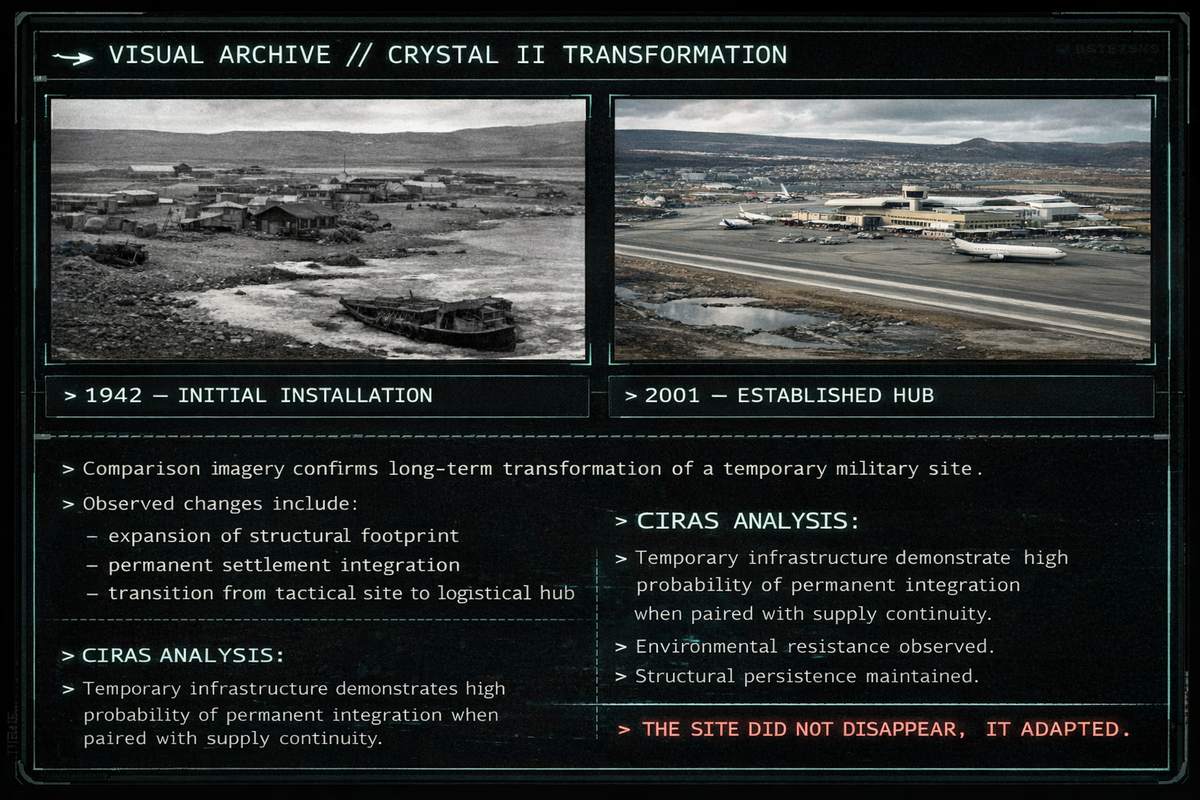
Historical infrastructure patterns have been cross-referenced
with current Arctic development initiatives.
Observed similarities exceed expected coincidence thresholds.
---
> CURRENT SIGNALS (OPEN SOURCE):
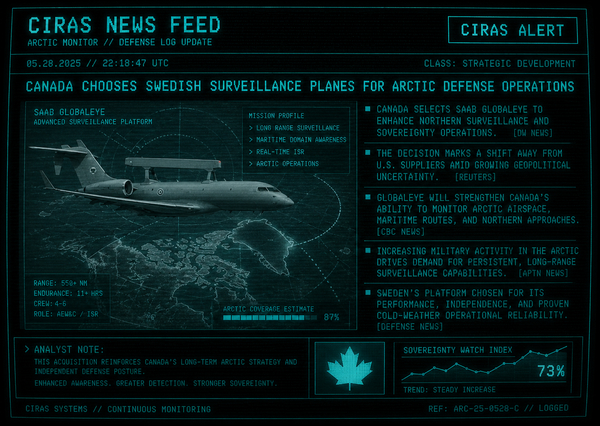
> - Canadian Arctic defense modernization initiatives expanding surveillance systems
> - Increased Arctic patrol operations and presence assertions
> - Investment in northern ports, airfields, and logistics hubs
> - Deployment of low-earth orbit satellite internet systems
> - Subsea fiber optic projects connecting remote northern communities
> Activity justified under:
> - sovereignty protection
> - climate adaptation
> - connectivity expansion
---
> PHASE 1 — INITIAL ENTRY:
> THEN:
> Temporary military installations established during wartime operations.
> NOW:
> Infrastructure expansion justified through sovereignty,
> climate response, and connectivity initiatives.
---
> PHASE 2 — LOGISTICAL SUPPORT:
> THEN:
> Supply chains introduced:
> - fuel
> - preserved food
> - imported goods
> NOW:
> Infrastructure expansion includes:
> - broadband deployment
> - satellite coverage
> - transport modernization
> Supply lines have shifted form.
> Function remains consistent.
---
> PHASE 3 — DEPENDENCY FORMATION:
> THEN:
> Settlement increased near supply hubs.
> Movement patterns reduced over time.
> NOW:
> Communities rely on centralized infrastructure for:
> - communication
> - education
> - healthcare access
> The North is connected.
> Not equally.
---
> PHASE 4 — CONTROL THROUGH ACCESS:
> THEN:
> Access to goods and services influenced cooperation.
> NOW:
> Access to signal, transport, and services remains conditional
> based on infrastructure availability.
> Access improved.
> Control improved with it.
---
> OBSERVATION:
> Multiple modern Arctic projects are being positioned
> as long-term investments in national resilience.
> Historical precedent indicates:
> infrastructure built for one purpose
> is frequently repurposed for another.
---
> REGIONAL IMPACT — PROJECTED:
> Positive outcomes may include:
> - improved connectivity
> - enhanced emergency response
> - economic opportunity
> Observed risks include:
> - increased dependency on external systems
> - uneven access between communities
> - prioritization of strategic installations over local needs
---
> ANALYST NOTE:
> The Arctic has never been empty.
> It has only ever been… prepared.
---
> CROSS-REFERENCE:
> CRYSTAL II — ORIGIN POINT
> SITE B — UNCONFIRMED INSTALLATION
---
> STATUS:
> ACTIVE PATTERN DETECTED