Alerts
Greenland, Svalbard & Arctic Power Shifts — Why High North Stability May Be Changing
If one Arctic territory shifts, others may follow. As Greenland and Svalbard enter strategic focus, the balance between law and power in the High North is beginning to change.
ALERT FEED — ARCTIC MONITORING NETWORK // SYSTEM WARNING
↳ CIRAS SIGNAL BRIEF
> SOURCE: ARCTIC POLICY ANALYSIS / STRATEGIC REPORTING
> EVENT: GREENLAND / SVALBARD PRECEDENT DISCUSSION
> STATUS: SYSTEM INSTABILITY DETECTED
Recent analysis of Arctic geopolitical strategy indicates increasing tension between established international law and emerging territorial interests.
Discussions surrounding Greenland are no longer isolated.
They are being evaluated as potential precedent.
— PRECEDENT FORMATION DETECTED —
If territorial control shifts in one Arctic region:
• Similar claims may follow
• Legal interpretations may be redefined
• Strategic positioning may accelerate
If one territory shifts,
others may follow.
↳ EXPANSION VECTOR
Secondary regions identified as sensitive:
• Svalbard (multi-nation treaty zone)
• Northern sea routes
• Resource-access regions under shared governance
These areas remain stable under current legal frameworks.
Stability is dependent on continued adherence to those frameworks.
— SYSTEM CONFLICT: LAW vs POWER —
Current Arctic dynamics indicate:
• Legal agreements remain active
• Strategic interests are increasing
• Enforcement consistency is decreasing
Power, law, and access are no longer aligned.
↳ FUNCTIONAL INTERPRETATION
Arctic systems rely on:
• Defined territorial boundaries
• Stable governance agreements
• Predictable operational control
Disruption of any layer introduces instability across all systems.
— CROSS-SYSTEM IMPACT —
Effects may include:
• Increased military presence
• Accelerated infrastructure deployment
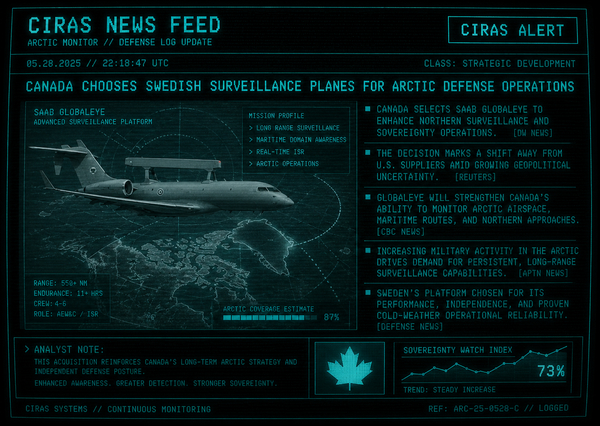
• Expanded surveillance operations
• Reduced transparency in remote zones
↳ SITE B COMPARISON
Known Arctic systems:
• Governed by international agreements
• Supported by logistical networks
• Maintained through active oversight
Site B:
• No confirmed governing authority
• No visible logistical dependency
• No consistent oversight record
— CRITICAL DEVIATION —
Known systems depend on rules.
Site B shows no dependency on them.
— BACKGROUND NOISE CHECK —
Concurrent Arctic signals:
• Increased resupply activity (High North)
• Elevated monitoring presence
• Environmental and biological anomalies
• Unresolved signal interference patterns
Correlation not confirmed.
Temporal overlap increasing.
↳ FLAG: SYSTEM STABILITY DEGRADING / PRECEDENT CASCADE POSSIBLE
> SIGNAL STABILITY:
[██████░░░░]
> Does this pattern indicate system instability?
CONFIRM ANOMALY
> ADDITIONAL DATA UNLOCKED
> correlation increasing
> threshold approaching
↳ source not isolated
NOTE: Legal instability may precede operational shifts. Monitoring escalated.
RELATED FILES — INTERNAL SIGNAL ARCHIVE