> SOURCE MATERIAL:
Crown-Indigenous Relations Report — Official Federal Statement
APTN News — Inuit Testimonies Archive
CBC Coverage — Qikiqtani Findings
> EVENT SUMMARY:
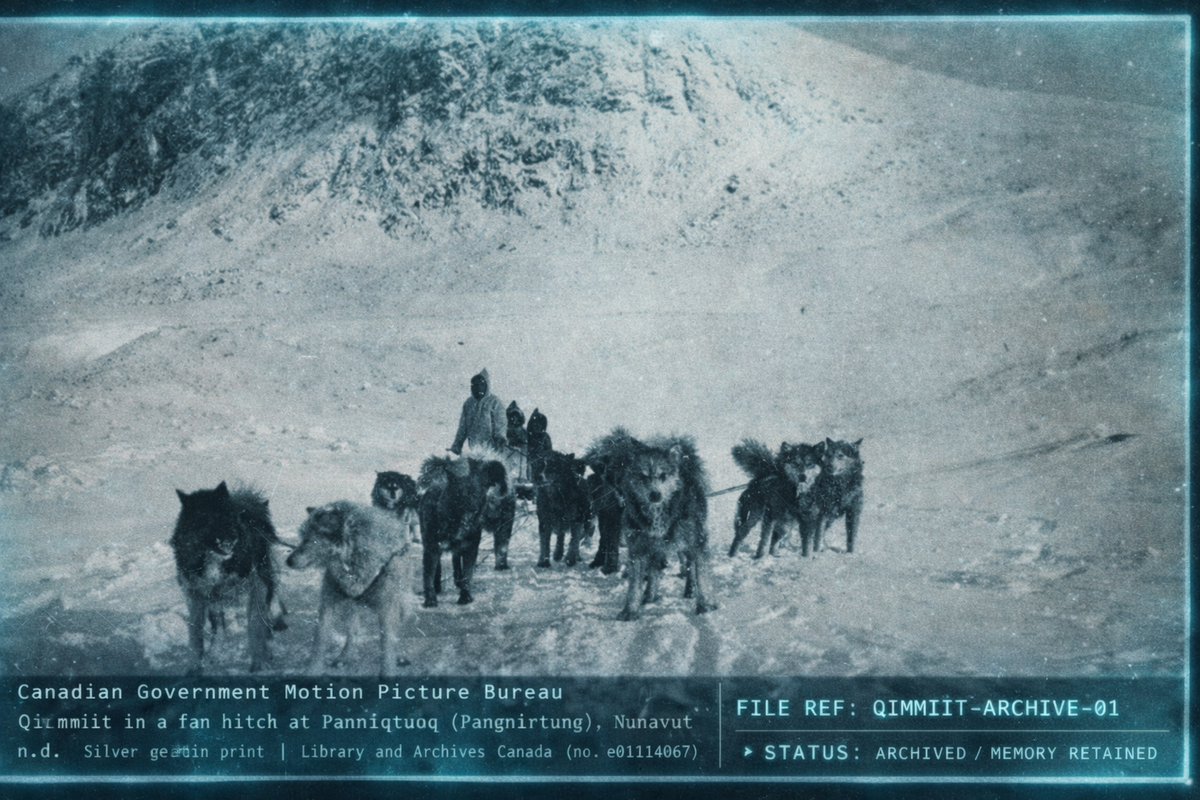
Between the mid-20th century settlement initiatives, multiple northern communities reported
the systematic killing of sled dogs (qimmiit) by enforcement authorities, including RCMP officers
and associated administrative agents.
> EXTERNAL ARCHIVE FOOTAGE ATTACHED — VERIFIED SOURCE 1-2
Official documentary: Qimmiq – Canada’s Arctic Dog (National Film Board of Canada)
Estimated losses range between 1,000 (documented regional events) to 20,000 animals across Arctic Canada.
Killings occurred in:
- Iqaluit (then Frobisher Bay)
- Baffin Island settlements
- Nunavik coastal regions
Witness accounts describe:
- Dogs shot while tethered outside dwellings
- Mass culling events within condensed timeframes
- Disposal via burning or abandonment on ice surfaces
“Over 200 dogs destroyed within a 72-hour window. Bodies piled and burned.”
> OFFICIAL POSITION:
Authorities cited:
- Public safety concerns
- Disease control
- Enforcement of loose-dog ordinances
However, Inuit testimony consistently contradicts these claims.
> EXTERNAL ARCHIVE FOOTAGE ATTACHED — VERIFIED SOURCE 2-2
Official documentary: Qimmit: A Clash of Two Truths (National Film Board of Canada)
> FIELD ANALYSIS:
Loss of qimmiit resulted in immediate systemic collapse of land-based living structures:
• Mobility loss → collapse of seasonal migration routes
• Hunting disruption → rapid onset food insecurity
• Cultural fracture → severance of generational knowledge transfer
Transition observed:
→ Dog teams replaced with mechanized transport (snowmobiles)
→ Increased dependence on imported fuel and infrastructure
Correlation detected with broader settlement enforcement patterns.
> COMMISSION FINDINGS:
No singular written extermination directive confirmed.
HOWEVER:
Actions classified as “systemic in effect” and executed without regard for Inuit survival conditions.
> CULTURAL FLAG:
Inuit cosmological records identify qimmiit as entities existing in proximity to early human origin states.
Some oral traditions describe dogs as former humans or co-created beings.
[CIRAS NOTE]: Cultural asset classification upgraded from LIVESTOCK → KINSHIP ENTITY.
> INCIDENT IMPACT — NON-MATERIAL:
Emotional and psychological disruption reported across all testimonies.
Recurrent themes include:
- “They took our way to move”
- “They cut us off from the land”
- “We could not follow the animals anymore”
Secondary effect:
Breakdown of trust toward enforcement bodies and external governance.
> DELAYED RESPONSE:
Provincial acknowledgment issued (2011).
Federal acknowledgment issued (2024).
Federal statement describes events as:
“Unjustified” and “a deep betrayal.”
Compensation allocated:
→ $45,000,000 toward cultural restoration and healing initiatives.
> CRITICAL OBSERVATION:
Temporal gap between event and acknowledgment exceeds 50 years.
Majority of primary witnesses deceased prior to recognition.
[CIRAS FLAG]: RESTORATIVE ACTION — DELAYED / INCOMPLETE
> ANOMALOUS CROSS-REFERENCE:
Multiple Arctic narrative clusters describe lingering presence of sled dogs after confirmed death events.
• Tracks appearing without teams
• Howling with no visible source
• Animals responding to non-visible handlers
In rare cases:
A singular presence is described — larger, silent, observing.
→ Designation (unconfirmed): “Nanuk”
> INTERPRETATION:
If qimmiit are kinship entities within Inuit cosmology,
then eradication may represent disruption beyond the physical.
“When foundational bonds are severed, residual structures may persist.”
> STATUS:
FILE REMAINS OPEN — MONITORING CULTURAL + ANOMALOUS OVERLAP